Business education and training services, namely, developing customized leadership and executive development programs and providing executive coaching services; business education and training services, namely, mentoring in the fields of personnel management, organizational development, and personal development.
The method came first. The software took ten years.
Ren isn’t an AI startup that went looking for a leadership framework. It’s a decade-old methodology that finally has a way to show up in the moment instead of the training room.
Taught to 100,000+ people leaders at Panasonic, Amazon, Okta and Southwest.

Jonathan Raymond
Founder & CEO · Author · Creator of the Accountability Dial™
Jonathan Raymond is the author of Good Authority (2016), the creator of the Accountability Dial™ and the founder and CEO of Good Authority, the company behind Ren.
Former attorney, then a decade as CEO of a leadership consultancy working inside companies from 50 to 50,000 people. Jonathan wrote Good Authority after watching the same pattern everywhere: caring, capable managers avoiding the one conversation that would change everything, not from a lack of will, but because nobody ever showed them how to start it small.
The best leaders aren’t the hero. They’re the guide.
Good Authority™ started with an idea most workplaces are built to ignore: the place we spend most of our waking lives should be the place we grow the most, and that personal and professional growth were never two separate things to trade off. They’re one thing.
It asks more of a leader than the usual advice, which only ever offers two settings: push harder, or go easier. Good Authority is the third, challenge and care, at the same time. Less Superman, more Yoda: not the one with all the answers, but the one who helps each person find their own.
That’s the work we’ve taught for a decade. Ren is how you live it, not in an offsite once a year, but in the ordinary moments where growth actually happens.
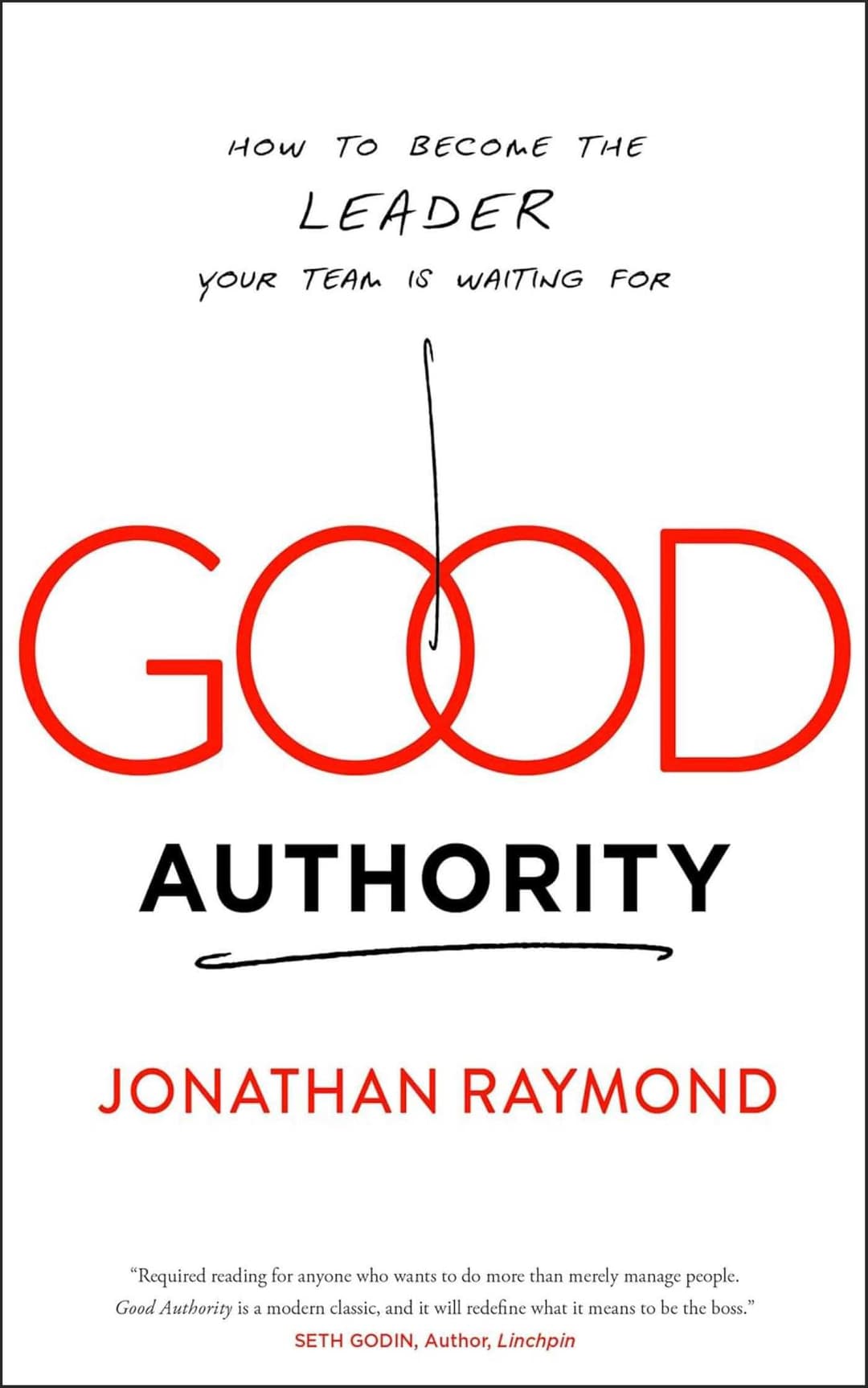
Good Authority (2016)
How to become the leader your team is waiting for. The book introduced the Accountability Dial™, five stages for turning the conversations managers avoid into the ones that change people's careers. 100,000+ copies later, it's taught inside some of the largest companies in the world.
100,000+ people leaders trained
A thousand managers at Amazon. A thousand at Okta. A thousand at Panasonic. Southwest Airlines built a course on the content; Sherwin-Williams and McKesson ran train-the-trainer programs. Fidelity's internal coaching practice teaches the Dial to the 1,800 leaders they coach. The method spread because it works in the room.
From the training room to the flow of work
Everyone leaves the workshop nodding. Then Tuesday at 10:14 arrives and the framework is three weeks behind you. Ren is what we built when we accepted that the limiting factor was never the concept. It was applying it in the moment. The same methodology, now coaching managers inside Slack and Teams, at the moment the conversation is cheap.
The thing that broke the room open.
In ten years of training executives, and rooms full of managers, from senior to brand new, the thing that broke the room open was always the same. Someone’s eyes would open to what an accountability conversation that’s actually humane sounds like.
And they’d see how long they’d been leaving themselves out of the equation, trying to change someone’s behavior without ever bringing their own humanity into it. Their concern. Their frustration. Their anxiety. They’d been conditioned that those didn’t belong at work.
The truth was simpler: they’d never learned how to speak to what they were feeling without acting it out — and that difference changes everything.
Ren is the attempt to put lightning in a bottle: to take those six-figure experiences, the ones only a lucky few ever got in a room with a great coach, and hand them to anyone, anywhere.
Jonathan Raymond
The kindest version of the truth.
Most software plays it safe, coaching so diplomatic it might as well be a press release. Ren takes the opposite position. It reads the room, then tells you what it actually thinks: the kindest version of the truth, the one people usually keep from you to avoid being uncomfortable.
Read “Salty, but Kind”Jonathan speaks about what AI is really asking of leaders.
Keynotes, executive sessions, and conference talks on accountability, the changing manager role, and why the human skills: judgment, curiosity, the willingness to say the true thing kindly, are the ones AI makes more valuable, not less. Recent audiences include engineering leadership communities, executive teams, and leadership podcasts.
Working with Jonathan directly: a keynote, an executive offsite, or a leadership team session, starts with a conversation.